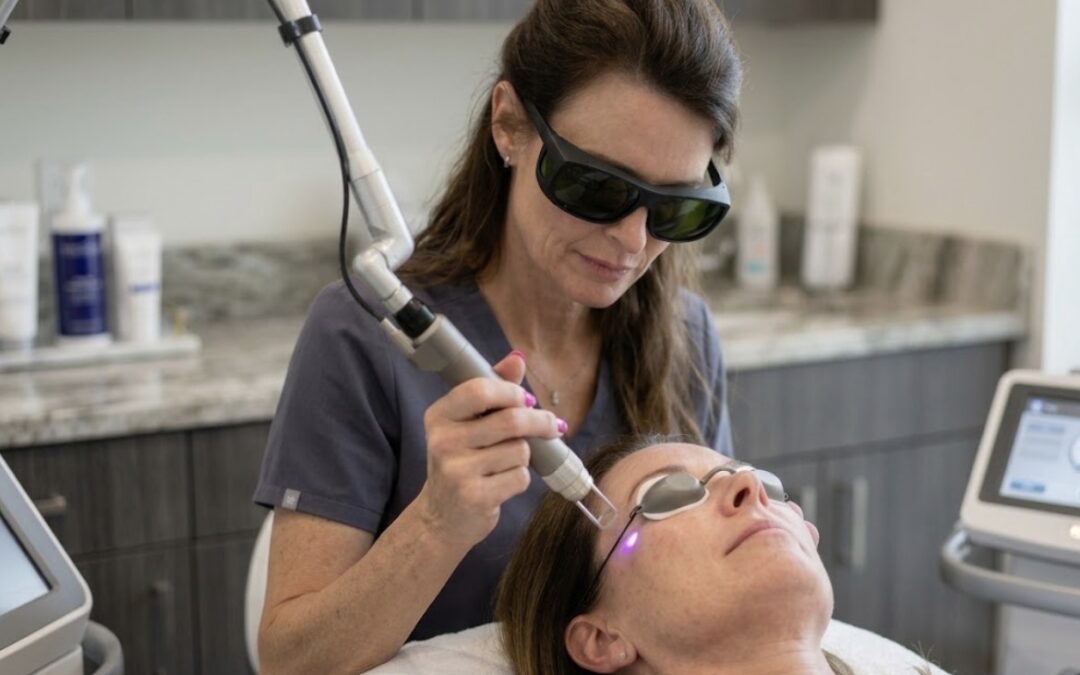
Florida sun, acne scars, fine lines, and uneven texture can gradually change how your skin looks and feels. When skincare products are no longer addressing those concerns, a more targeted treatment may be worth considering.
CO2 laser treatment is a resurfacing option that can improve certain types of visible skin damage by removing microscopic areas of damaged tissue and stimulating a controlled healing response. It can be effective for the right candidate, but treatment depth, skin type, downtime, and aftercare all matter.
At Wellness IV Bar & Aesthetics in Tampa, treatment planning starts with a careful assessment. The goal is not to make your skin look overtreated. It is to choose an approach that fits your concerns, your skin, and the recovery time you’re comfortable with.
What You’ll Learn From This Article
- How CO2 laser resurfacing works and what makes fractional treatment different
- Which concerns may respond well to CO2 laser treatment
- Why skin type, skin tone, and medical history affect treatment planning
- How treatment strength can influence recovery and risk
- What to expect during healing and when to contact your provider
What Can CO2 Laser Treatment Do for Damaged Skin?
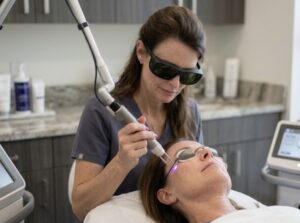
CO2 laser resurfacing is an ablative cosmetic treatment commonly used for concerns such as fine lines, wrinkles, uneven skin texture, photoaging, and certain types of acne scarring.
The laser uses carbon dioxide energy, which water in the skin strongly absorbs. This allows the device to remove very small areas of tissue while also creating controlled heat in the treatment area.
With fractional CO2 laser resurfacing, the laser creates microscopic treatment columns instead of treating the entire surface uniformly. Small areas of surrounding skin remain intact, which helps support healing.
A clinical review of fractional carbon dioxide laser resurfacing explains that fractional technology was developed to preserve some benefits of ablative resurfacing while reducing recovery and complication concerns associated with older, fully ablative techniques.
CO2 laser treatment may be useful when the concern involves damaged skin texture or surface irregularities. It is not the right tool for every cosmetic issue, which is why the next step is understanding what the laser is actually changing.
How Does CO2 Laser Resurfacing Work?
CO2 laser treatment affects both the skin’s surface and the tissue beneath it. Understanding that process helps explain why results develop gradually rather than appearing all at once.
The Role of the Carbon Dioxide Laser
A carbon dioxide laser operates at a wavelength of approximately 10,600 nanometers. Water in the skin absorbs this energy efficiently.
When the laser contacts the targeted tissue, it creates controlled ablation and thermal injury. In simple terms, it removes microscopic areas of damaged skin and triggers a repair response.
As the treated area heals, the skin rebuilds its surface while deeper tissue begins a longer remodeling process.
Fractional CO2 Versus Fully Ablative Resurfacing
Traditional fully ablative laser resurfacing removes a more continuous layer of skin. That approach can provide significant resurfacing, but it may also involve more downtime and a greater risk of complications.
Fractional CO2 treatment creates small treatment columns with untreated skin between them. This allows the provider to resurface selected areas while preserving surrounding tissue that supports recovery.
Providers can also adjust the treatment by depth, density, energy, and number of passes.
How CO2 Laser Treatment Affects Collagen
The controlled heat produced during laser resurfacing affects collagen in the dermis and triggers a wound-healing response.
Research examining CO2 laser exposure has found changes in fibroblast activity and collagen synthesis after treatment. One study using human skin cells and an animal model reported increased collagen expression after CO2 lattice laser exposure. Because part of that evidence comes from laboratory and animal research, it helps explain the biological process but should not be interpreted as a promise of a specific cosmetic result.
This remodeling process may be why skin texture and firmness keep changing after the surface has healed.
Once the mechanism makes sense, the most important question becomes whether the treatment matches the concern you actually want to address.
Tip 1: Match the Treatment to Your Main Skin Concern
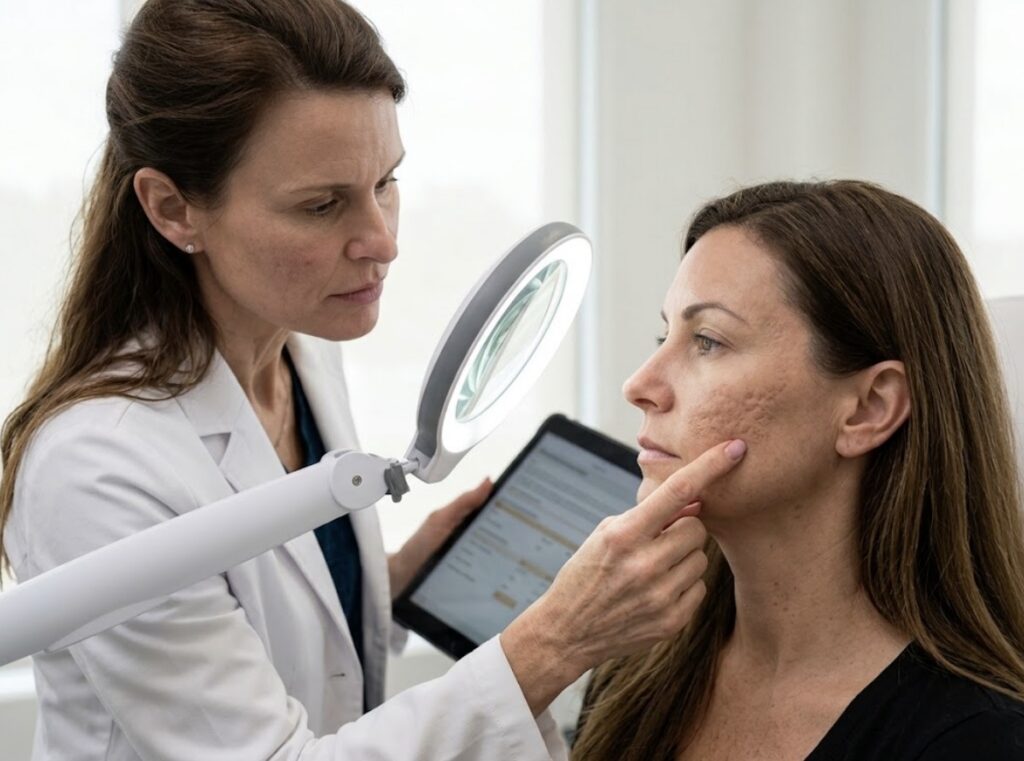
CO2 laser resurfacing can address several concerns at once, but that does not mean it is the best option for every sign of aging or skin damage.
It may be considered for:
- Fine lines and wrinkles
- Rough or uneven skin texture
- Visible sun damage
- Certain acne scars
- Selected scars from previous injury or procedures
- Textural changes associated with aging
Acne scarring is a good example of why proper assessment matters. Acne scars can vary in shape, depth, and severity. A shallow rolling scar does not behave the same way as a deep ice pick scar, so one resurfacing plan may not suit every type.
CO2 laser treatment also does not replace treatments that address different causes of facial aging. Volume loss may respond better to dermal filler. Expression lines may be better suited to Botox. Some patients may benefit from microneedling or another skin treatment instead of, or in addition to, laser resurfacing.
At Wellness IV Bar & Aesthetics, the consultation should start with the concern itself, not with the assumption that CO2 laser is automatically the answer.
Once the treatment goal is clear, your skin type and medical history matter just as much.
Tip 2: Consider Skin Type, Skin Tone, and Medical History
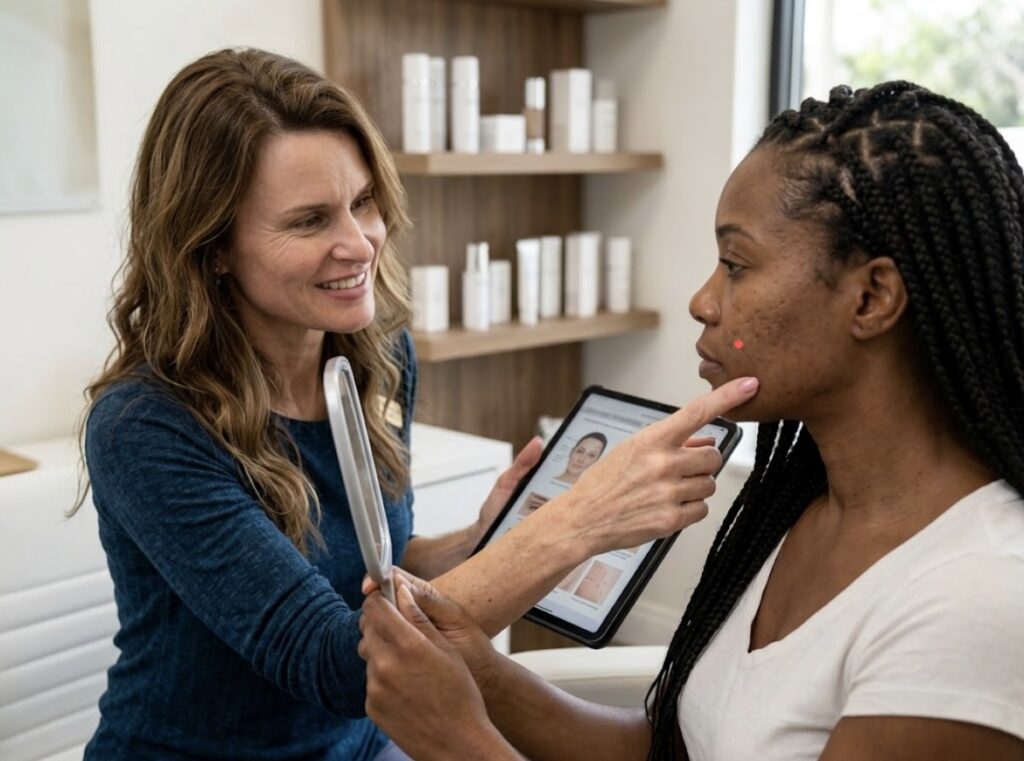
Plan CO2 laser resurfacing around the individual. The same laser settings don’t work for every patient.
Skin Tone Can Affect Pigment Risk
Any treatment that creates inflammation can affect pigmentation, especially in skin that tends to tan or develop dark marks after irritation.
Post-inflammatory hyperpigmentation can occur after laser resurfacing. Hypopigmentation, where treated skin becomes lighter, is another potential concern.
A review focused on complications after fractional CO2 resurfacing notes that patients who tan easily may have an increased risk of pigment changes. The same review also explains that fractional techniques reduce some of the risks associated with older, fully ablative procedures, although complications can still occur.
This does not mean deeper skin tones are automatically excluded from treatment. It means the provider should assess your pigmentation history, skin type, recent sun exposure, and treatment goals before deciding how aggressive the laser should be.
Your Health History Matters
Your provider may also ask about:
- Previous keloids or hypertrophic scars
- Delayed wound healing
- Active skin infections
- Immune system concerns
- History of herpes outbreaks
- Current medications
- Recent cosmetic procedures
- Previous laser or peel reactions
These details can affect whether treatment is appropriate, when to perform it, and how to manage recovery.
Diane Genne, APRN, brings more than 25 years of clinical experience to Wellness IV Bar & Aesthetics. That medical background supports a consultation focused on the whole patient, not just the skin.
After establishing candidacy, treatment intensity becomes the next major decision.
Tip 3: Choose the Right Treatment Intensity, Not the Strongest Setting
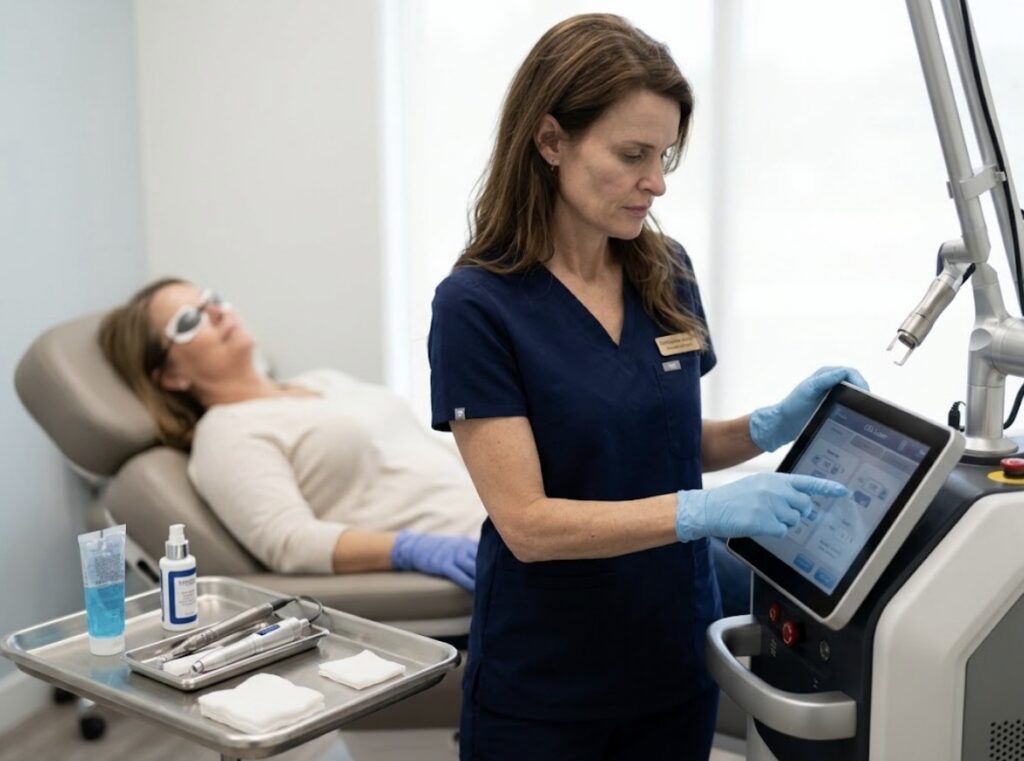
A stronger CO2 laser treatment is not automatically better.
Providers can adjust several treatment parameters, including:
- Energy
- Density
- Depth
- Number of passes
- Treatment coverage
- Specific areas being resurfaced
Higher intensity can create more tissue injury, which may also mean a longer recovery period and a higher risk of unwanted effects.
Different areas of the body can respond differently. Facial skin generally has a greater concentration of structures that support healing compared with areas such as the neck or chest, so treatment parameters should not simply be copied from one area to another.
A good plan balances the desired level of resurfacing with skin characteristics, risk, and the amount of downtime you can realistically manage.
| Treatment factor | Why it matters |
|---|---|
| Main concern | Wrinkles, acne scarring, and texture problems may require different settings |
| Skin type | Can influence pigment risk and healing |
| Treatment area | Some areas tolerate resurfacing differently |
| Treatment depth | Deeper treatment may require more recovery |
| Downtime available | Your work, travel, and social schedule should be considered |
| Healing history | Previous scarring or delayed healing may change the plan |
| Previous procedures | Recent treatments can affect timing and skin sensitivity |
Some patients may need one treatment, while others may benefit from additional sessions. No universal number applies to everyone.
The settings selected during treatment also influence what happens afterward, so recovery planning is an important part of the decision.
Tip 4: Plan for CO2 Laser Recovery Before Treatment Day
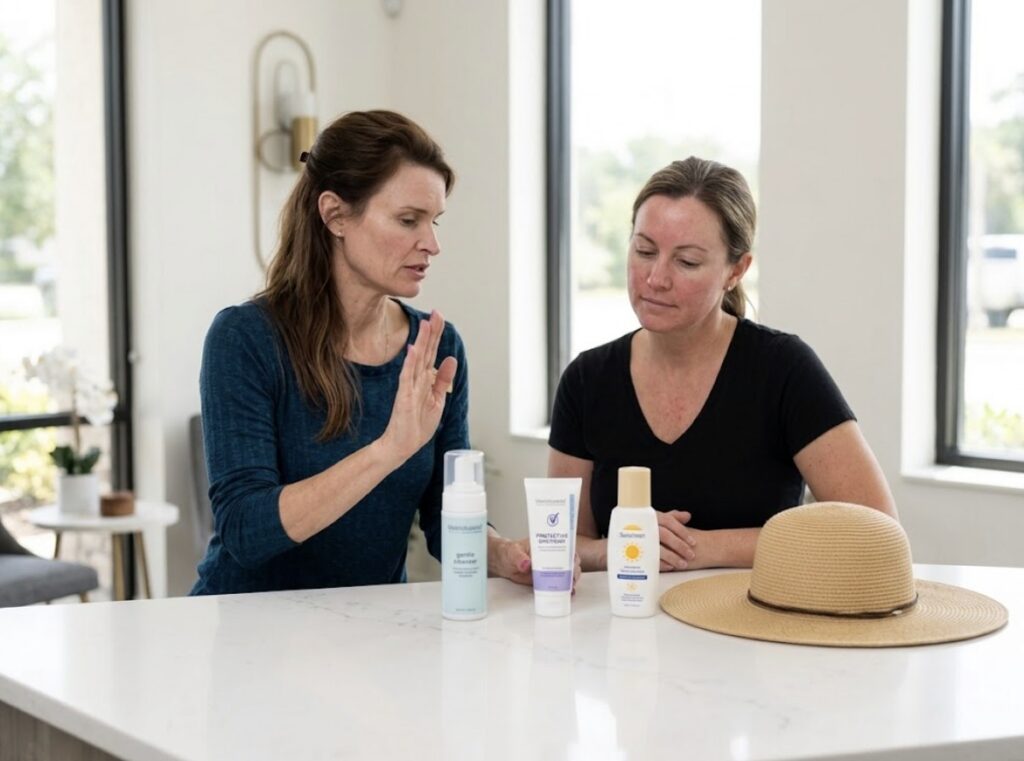
Recovery is not an afterthought with an ablative laser. It is part of the treatment itself.
What Early Healing May Look Like
After fractional CO2 laser resurfacing, you may experience temporary:
- Redness
- Swelling
- Sensitivity
- Rough texture
- Crusting
- Peeling
The skin then begins rebuilding its protective surface.
Healing time varies by treatment intensity, skin type, treatment area, and individual response. Redness may last longer than the initial peeling or surface recovery.
Avoid scheduling your treatment based only on a generic recovery estimate you saw online. Your provider can give you a better idea of what to expect based on the settings planned for your skin.
Follow Your Aftercare Instructions Closely
Because ablative laser resurfacing temporarily disrupts the skin barrier, gentle aftercare is important.
Your instructions may include mild cleansing, a protective ointment, and a temporary pause from certain active skincare products.
Don’t restart retinoids, exfoliating acids, scrubs, or other strong products unless your provider clears them.
Freshly treated skin needs time to recover before returning to a normal cosmetic skincare routine.
Plan Around Tampa Sun Exposure
Sun exposure deserves particular attention in Tampa.
Beach days, boating, outdoor dining, golf, pool time, and regular daily exposure can make post-treatment protection more challenging.
Your provider may recommend avoiding direct sun during early recovery and following specific guidance about when to restart sunscreen. Hats, shade, and scheduling treatment away from vacations or outdoor events can make recovery easier.
Good aftercare supports healing, but knowing which symptoms deserve medical attention is just as important.
Tip 5: Understand the Risks and Know When to Call
CO2 laser resurfacing has become more controlled with fractional technology, but it still carries potential side effects and complications.
These can include:
- Redness and swelling
- Pigment changes
- Acne or milia
- Skin irritation
- Infection
- Prolonged redness
- Scarring
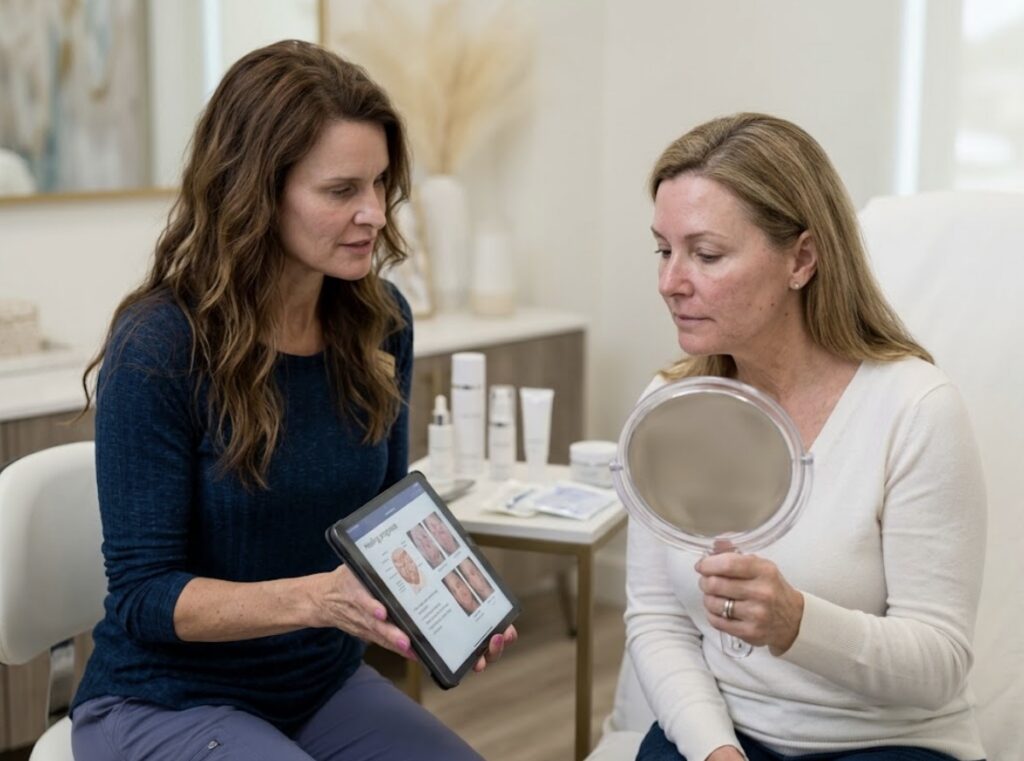
Most patients expect some redness and sensitivity after treatment. Concern arises when symptoms become unusual, worsen instead of improving, or don’t follow the expected healing pattern.
Contact your treating provider if you notice increasing pain, spreading redness, unusual drainage, delayed healing, or another change that concerns you.
Do not rely on social media or someone else’s laser experience to judge whether your recovery is normal. Treatment settings and individual healing can differ significantly.
It is also important to give results time. Surface healing happens first, while collagen remodeling and changes in skin texture can continue after the visible recovery period.
That makes follow-up care part of the treatment plan, not simply an optional final step.
What Should a CO2 Laser Consultation at Wellness IV Bar Cover?
A consultation should help answer two questions: Is CO2 laser treatment appropriate for your skin, and does it fit your goals?
At Wellness IV Bar & Aesthetics, the discussion may include:
- The skin concern you want to improve
- The location and severity of sun damage or scarring
- Your skin type and pigmentation history
- Previous laser treatments or chemical peels
- Your current medications and health history
- The amount of downtime you can accommodate
- Your expectations for improvement
- Other cosmetic options that may suit your concern
Wellness IV Bar & Aesthetics is a Nurse Practitioner-owned and operated clinic serving Tampa Bay and the surrounding area. Founder Diane Genne, APRN, combines decades of clinical experience with a personalized approach to aesthetics, wellness, hormone care, weight management, and regenerative medicine.
The focus is not on performing the most aggressive procedure possible. It is on selecting a treatment plan that makes sense for your skin, your health, and the way you want to look.
A good consultation should leave you with clear expectations about both treatment and recovery before you decide to move forward.
CO2 Laser Treatment FAQs
1. What does CO2 laser treatment do to your skin?
CO2 laser treatment removes microscopic areas of damaged tissue and creates controlled heat within the skin. This triggers surface renewal and a wound healing response that can contribute to collagen remodeling. It may help improve fine lines, wrinkles, uneven texture, photoaging, and certain scars in appropriate candidates.
2. How long does it take to heal after CO2 laser resurfacing?
Healing time varies. Fractional treatments generally allow the skin surface to recover faster than older fully ablative resurfacing, but redness and sensitivity may continue after peeling or crusting improves. Treatment strength, skin type, and the size of the treated area all affect recovery.
3. Can CO2 laser treatment improve acne scarring?
It may improve certain types of acne scarring. Results depend on the type and depth of the scars, skin characteristics, treatment settings, and whether the treatment plan includes another procedure. A consultation can help determine if laser resurfacing makes sense for your scar pattern.
4. Is CO2 laser treatment appropriate for every skin tone?
Not necessarily. Skin tone, tanning tendency, previous pigment changes, medical history, and planned laser settings can all affect risk. Patients who are more prone to hyperpigmentation may require additional caution and individualized treatment parameters.
5. How many CO2 laser treatments will I need?
The number varies by person. Some patients may need one treatment, while others may need additional sessions to reach their goals. Treatment depth, skin concerns, recovery preferences, and response to the first session all influence the plan.
Is CO2 Laser Treatment Right for Your Skin?
CO2 laser resurfacing may be worth considering if sun damage, fine lines, acne scars, or uneven skin texture are becoming more noticeable and topical skincare no longer delivers the improvement you want.
The treatment works best when the plan considers more than the surface concern. Skin type, treatment depth, medical history, pigment risk, recovery time, and aftercare all play a role.
At Wellness IV Bar & Aesthetics, the goal is to help you make an informed choice and choose an approach that looks natural and fits your life.
If you are considering CO2 laser treatment in Tampa, book a personalized consultation with Diane Genne, APRN, and the Wellness IV Bar & Aesthetics team. We can assess your skin, discuss realistic expectations, and help you decide whether CO2 laser resurfacing belongs in your rejuvenation plan.