
What does OCN mean after Diane’s name? Patients often ask us this, including people in cancer treatment who want to know about high-dose vitamin C.
OCN certification appears in Diane Genne’s credentials, but most people have never seen those three letters. They know RN. They might know APRN. OCN is less familiar.
That gap matters if you’re dealing with cancer, recovering from treatment, or thinking about IV therapy while your immune system is under strain. This article covers what the credential means, how a nurse earns it, what it does and doesn’t tell you, and why it’s worth asking about before anyone starts your IV.
What You’ll Learn From This Article
- What OCN stands for and which organization awards the credential
- How OCN certification differs from a nursing license issued by a state board of nursing
- What a nurse must do to qualify for the OCN exam and how often the credential must be renewed
- What research shows about certified nurses and symptom care for oncology patients
- Why oncology nursing experience matters for high-dose vitamin C and other IV therapy
- What OCN certification can and can’t tell you about a provider
- What to expect during your first visit with an OCN nurse
What Does OCN Stand For? The Oncology Certified Nurse Credential
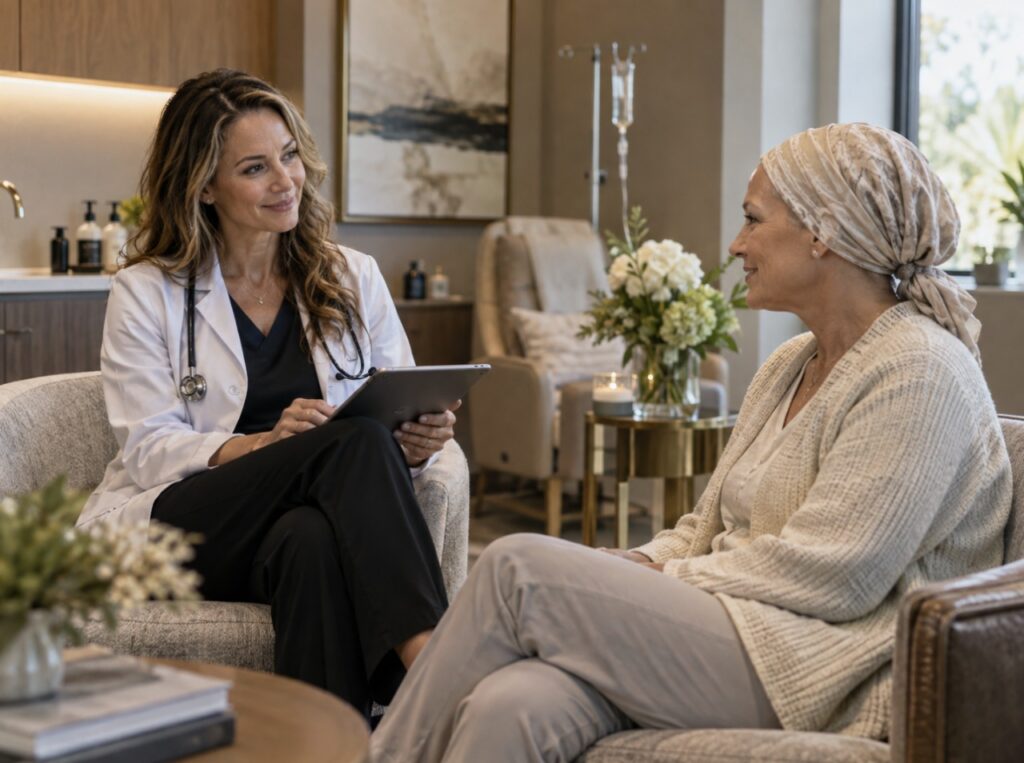
OCN stands for Oncology Certified Nurse. It’s a specialty certification for a registered nurse (RN) who cares for adults with cancer. The Oncology Nursing Certification Corporation, usually called ONCC, awards it.
ONCC is a nonprofit that develops, administers, and evaluates oncology nursing certification programs, and it’s accredited by the National Commission for Certifying Agencies. It isn’t a school or a state agency. It tests whether oncology nurses know the specialty well enough to earn the credential, and then checks that they keep that knowledge current.
Oncology nursing certification is voluntary. No law requires an RN to hold it, which is part of why it matters. A nursing journal column describes certification as a voluntary accomplishment that patients, families, peers, and employers recognize, and as confirmation of a nurse’s clinical experience and knowledge.
What does that mean in practice? A nurse with OCN after their name chose to sit for a demanding exam in cancer care, passed it, and committed to keep proving that knowledge. To see why that matters, it helps to separate certification from a nursing license.
OCN Certification vs. a Nursing License
Most of the confusion starts here, and it’s a fair question. A license and a certification sound similar, but they do different jobs.
A nursing license comes from a state board of nursing. It gives a nurse legal permission to practice as an RN or, with graduate education, as an advanced practice registered nurse (APRN). Every practicing nurse needs one.
A certification like OCN comes from a national certifying body. It’s optional, it covers one specialty, and it sits on top of the license. A nurse can’t earn an OCN without an active RN license, and many licensed nurses never pursue it.
| RN or APRN license | OCN certification | |
|---|---|---|
| Issued by | State board of nursing | Oncology Nursing Certification Corporation (ONCC) |
| Required to practice? | Yes | No, it’s voluntary |
| What it shows | Legal permission to practice nursing | Tested specialty knowledge in adult oncology nursing |
| How it’s earned | Accredited nursing education and a national exam | Oncology practice hours, oncology education, and a specialty exam |
| How long it lasts | Set by each state’s renewal cycle | Four years, then the nurse must renew |
When a provider lists both APRN and OCN, the APRN shows her license and role. The OCN shows a specialty credential in caring for people with cancer.
OCN Eligibility: What a Nurse Has to Do First
ONCC sets strict rules on who can take the exam. According to ONCC’s OCN requirements, a candidate must meet all of these at the time of application and testing:
- A current, active, unencumbered RN license in the US, its territories, or Canada
- At least two years of RN experience within the four years before applying
- At least 2,000 hours of adult oncology nursing practice within those same four years
- At least 10 contact hours of oncology continuing education, or an academic oncology nursing elective, within the past three years
“Unencumbered” means the license carries no restrictions or disciplinary conditions. Two thousand hours is roughly a full year of full-time work spent specifically with cancer patients.
Then comes the exam. The test has 165 multiple-choice questions over three hours, and certification lasts four years after a nurse passes. Passing once doesn’t finish the process, though, and patients rarely hear about the next part.
How Oncology Nurses Renew OCN Certification
Nurses must renew OCN certification every four years or lose the credential. The renewal requires ongoing work.
To renew, a nurse needs a current OCN, an active, unencumbered RN license, and ongoing oncology practice hours. Most nurses renew through professional development. ONCC gives them a learning needs assessment, and the results show which subject areas need more study and how many points they must earn. Other renewal routes combine practice hours or points with retesting.
Why does this matter to you? Cancer care changes quickly. New drugs, new side effect guidance, and new supportive care approaches come out all the time. A nurse who renews every four years has to keep up with those changes.
Renewal proves ongoing education. It doesn’t prove perfection. It’s a strong sign of commitment, and it means the most when paired with real hands-on experience. The research on certified nurses supports that.
What Research Says About Certified Nurses and Oncology Patients
Researchers have studied whether oncology nursing certification makes a measurable difference. One 2009 study surveyed 93 nurses, 35 of them certified in oncology, along with 270 patients. The certified nurses scored higher on knowledge and attitude surveys about pain and nausea management. Chart audits also showed they followed national guidelines for chemotherapy nausea and vomiting more often than noncertified nurses.
The Canadian Association of Nurses in Oncology reached a similar view. Its position statement says specialty certification shows excellence in oncology knowledge and practice to patients, families, and employers, and it recognizes ONCC’s OCN credential by name.
In practice, better symptom knowledge means a nurse is more likely to notice nausea, pain, or a reaction early and respond correctly. For someone already worn down by treatment, that attention makes a real difference.
These studies looked mostly at hospital and cancer center settings. One study can’t prove that every certified nurse gives better care than every noncertified nurse. It does show that the credential reflects real knowledge, and that knowledge applies directly to IV therapy.
Why OCN Certification Matters for High Dose Vitamin C and IV Therapy
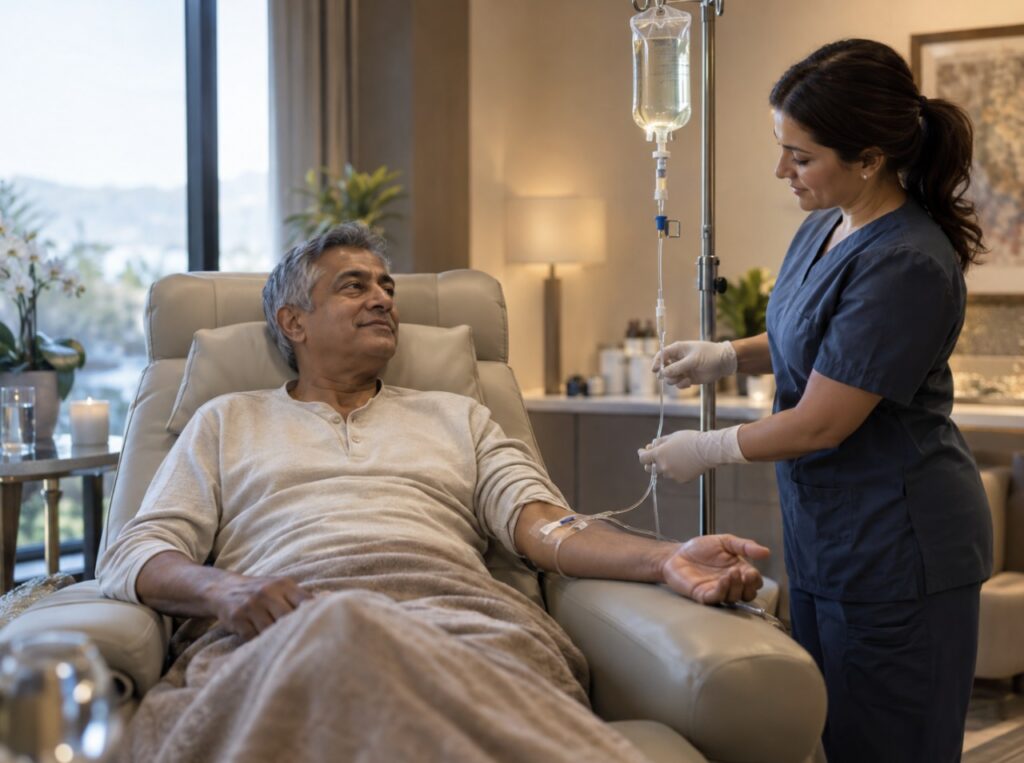
This was the patient’s original question. If you’ve had cancer, or you’re in treatment now, an IV is more than a routine drip. Your veins may be fragile after chemotherapy. You may have a port. Your labs may shift from week to week, and some medications raise questions about timing.
An oncology-certified nurse has handled those situations many times. Diane Genne, APRN, has more than 25 years of infusion experience, with an extensive background in infusion oncology. She has treated hundreds of patients with cancer, autoimmune diseases, and palliative care needs across hospitals, outpatient infusion centers, and private practice. That background shapes how she approaches high-dose vitamin C at our Tampa clinic.
Careful high-dose vitamin C care usually includes:
- A full health history, including your current cancer treatment plan
- Screening labs before the first high-dose infusion, such as a G6PD test and a kidney function check, because low G6PD levels can make high-dose vitamin C unsafe
- Communication with your oncologist before you start
- Monitoring throughout the infusion for any reaction
High-dose vitamin C isn’t a cancer treatment. It doesn’t replace chemotherapy, radiation, immunotherapy, or your oncologist’s plan. It’s an elective, complementary therapy, and results vary from person to person. An oncology-certified nurse knows those limits and will tell you plainly.
The same experience applies to NAD+ therapy and our customized IV therapy, where vein access, infusion pace, and reaction monitoring still matter.
What to Expect During Your First Visit With an OCN Nurse

Your first visit starts with a conversation, not an IV. Every patient at Wellness IV Bar gets a full consultation and assessment before treatment, so Diane can understand your health, your concerns, and your goals. If you’re in cancer treatment or recently finished it, expect questions about your treatment plan, your timeline, and your oncology team.
A typical first visit covers:
- Your health history, current medications, and any recent lab results
- Whether you need lab work before high-dose vitamin C, such as a G6PD test or a kidney function check
- How we’ll coordinate with your oncologist before your first infusion
- Vein access, especially if chemotherapy has made your veins harder to reach
- What the infusion involves, how long it takes, and which side effects to watch for
High-dose vitamin C is preservative-free and ordered specifically for each client, so your first infusion may happen at a later visit. Most IV infusions take 30 to 60 minutes. NAD+ can take two to four hours. You can relax, work, or use your phone during a session.
You’ll leave with a clear plan and honest answers. There’s no pressure to book anything on the spot. If it’s easier to start from home, initial consultations are also available by telemedicine.
Frequently Asked Questions for OCN Certification in Tampa
1. What does OCN mean after a nurse’s name?
OCN means Oncology Certified Nurse. The Oncology Nursing Certification Corporation awards it to registered nurses who meet oncology practice requirements, complete oncology education, and pass a specialty exam in adult cancer care. It demonstrates tested oncology knowledge beyond the nurse’s state license. Because it’s voluntary, not every oncology nurse holds it.
2. Is an oncology certified nurse the same as an oncologist?
No. An oncologist is a physician who diagnoses cancer and directs treatment such as chemotherapy or radiation. An oncology certified nurse is an RN, and sometimes an APRN, with specialty certification in caring for people with cancer. OCN nurses manage symptoms, give infusions, watch for side effects, and educate patients. They work alongside your oncology team and don’t replace its treatment decisions.
3. How can I verify a nurse’s OCN certification in Florida?
Start with ONCC, which offers online verification of its credentials on its website. To check the nursing license itself, use your state board of nursing’s license lookup. In Florida, that’s the Department of Health license verification search. Both take a few minutes, and a trustworthy provider will be glad you checked before starting IV therapy.
4. Can cancer patients in Tampa get high-dose vitamin C with an oncology-certified nurse?
It depends on your health and your treatment plan. Anyone in active cancer treatment should expect a detailed consultation, screening labs, and coordination with their oncologist before a first infusion. High-dose vitamin C is a complementary therapy, not a cancer treatment, and it isn’t right for everyone. Suitability and results vary from person to person.
5. How long is OCN certification valid?
OCN certification lasts four years. To renew, an oncology certified nurse needs an active, unencumbered RN license and continued oncology practice hours. The nurse then either earns professional development points in assigned subject areas or retakes the exam. This cycle keeps a nurse’s cancer care knowledge current as treatments and guidelines change.
Your Next Step With an Oncology Certified Nurse in Tampa
OCN certification shows that a nurse chose to prove specialty knowledge in cancer care and continues to prove it over time. Meet Diane to learn how her infusion oncology background shaped Wellness IV Bar and how we approach IV care. If you have questions about high-dose vitamin C, NAD+, or IV therapy during or after cancer treatment, text us at (813) 290-1994 or book your personalized consultation, and we’ll give you honest answers based on your health.