![Hair Restoration Treatment Tampa, FL - Fight Hair Loss [Guide]](https://wellnessivbar.com/wp-content/uploads/2026/08/hair-restoration-treatment-tampa-fl-fight-hair-loss-guide-1080x675.jpg)
More hair in the shower, a widening part, or a receding hairline can be difficult to ignore. These changes may happen slowly, but they can still affect how you feel about your appearance and confidence.
The right hair restoration treatment starts with identifying what may be contributing to the hair loss. Genetics, hormones, illness, stress, nutrition, medications, and scalp conditions can all play a role. Once the likely cause is clearer, you can explore treatments that fit your health, goals, and stage of thinning.
At Wellness IV Bar & Aesthetics in Tampa, care begins with a personal consultation. Rather than recommending the same plan to every patient, our clinical team considers your hair loss pattern, health history, concerns, and expectations before discussing your options.
What You’ll Learn From This Article
- How common types of hair loss affect men and women
- Why a scalp and health assessment should come before treatment
- How medications, non-surgical care, and hair transplant surgery differ
- What Derm Peptide scalp treatment involves
- What to expect during treatment and recovery
- How long changes in hair growth may take
- When a dermatologist or another medical professional may need to evaluate your hair loss
Why Hair Loss Happens
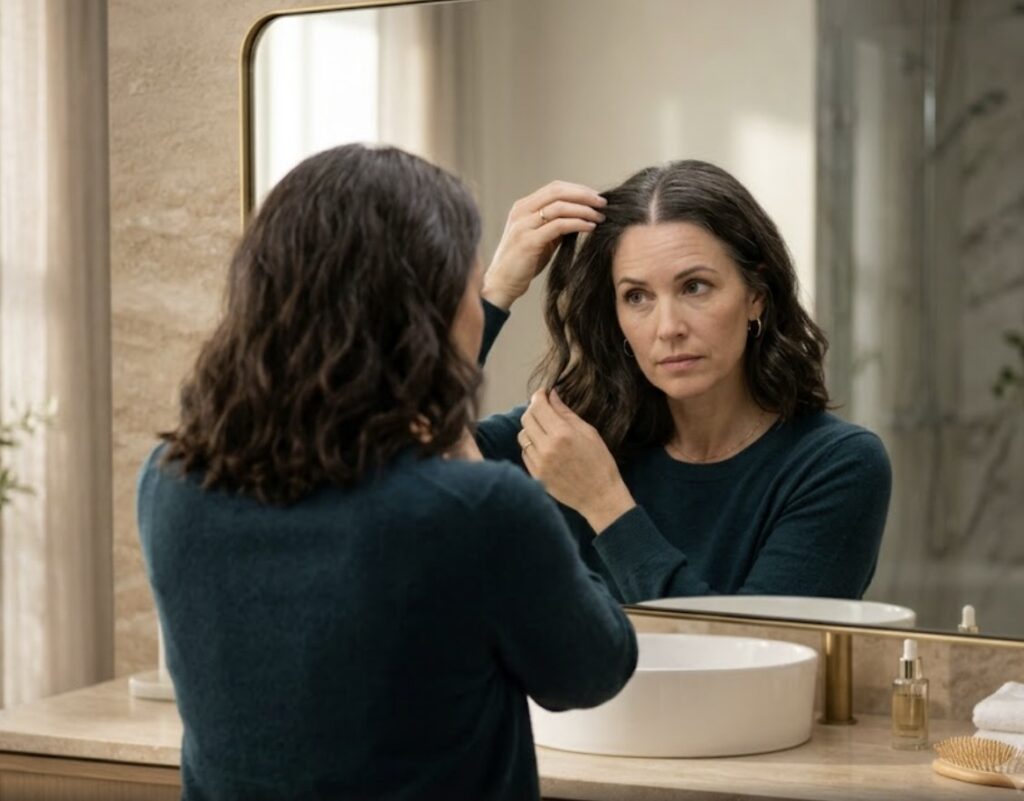
Hair loss is not a single condition. It can appear as sudden shedding, gradual thinning, a receding hairline, patchy areas, or hair breakage. Each pattern may have a different cause and may respond to a different type of care.
Common Causes of Thinning and Shedding
Hereditary pattern hair loss is one of the most common causes. Men may first notice thinning at the temples or crown. Women often see a wider part, reduced volume, or a thinner ponytail.
Other possible contributors include:
- Menopause and other hormonal changes
- Thyroid conditions
- Low iron or other nutritional deficiencies
- Rapid weight loss or restrictive dieting
- Pregnancy and postpartum changes
- Illness, fever, surgery, or severe stress
- Certain medications
- Autoimmune conditions
- Tight hairstyles and heavy extensions
- Frequent heat styling or chemical processing
- Scalp irritation, infection, or inflammation
Hair can also break along its shaft rather than fall from the root. This can make hair look thin even when the follicles remain active.
Temporary Shedding Versus Progressive Hair Loss
Temporary shedding often affects the scalp more evenly. It may begin several weeks or months after a major illness, stressful event, surgery, pregnancy, or dietary change.
Progressive hair loss usually develops more slowly and follows a pattern. You may notice thinning at the crown, temples, or part line. Smooth bald patches, significant itching, scaling, pain, or sores may indicate a condition that requires medical evaluation.
The American Academy of Dermatology explains that finding the cause of hair loss is an important part of choosing the right treatment.
Recognizing the pattern is useful, but a closer look at your scalp, health, and recent changes provides a much stronger starting point.
Why a Hair and Scalp Assessment Comes First
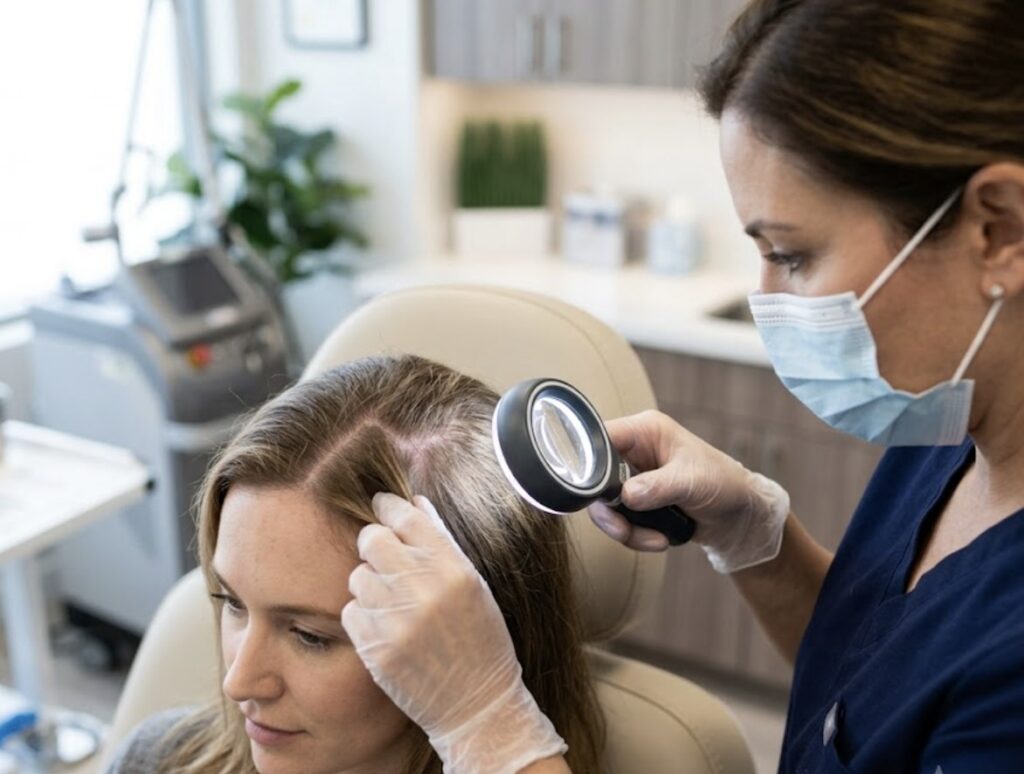
It is natural to want to begin treatment as soon as thinning becomes noticeable. Still, choosing a procedure before understanding the cause can lead to poor results or delay care for an underlying medical concern.
A thoughtful assessment helps determine whether the issue involves shedding, breakage, progressive changes in follicles, or a scalp condition.
What a Provider May Review
During a consultation, your provider may ask:
- When the hair loss began
- Whether it appeared suddenly or gradually
- Which parts of the scalp are affected
- Whether you have shedding, breakage, or both
- Whether close relatives have similar thinning
- Which medications and supplements you use
- Whether you recently experienced illness, surgery, stress, pregnancy, or weight change
- Whether you have fatigue, hormone symptoms, or other health concerns
- Which hair loss treatments you have already tried
Mayo Clinic notes that hair loss evaluation may also include questions about diet, hair care habits, medications, and family history. Depending on the situation, a clinician may recommend blood tests, a hair pull test, microscopy, or a scalp biopsy.
When Additional Medical Evaluation May Be Needed
A medical spa treatment may not be the right first step for every patient. Your provider may recommend a dermatologist, primary care clinician, or another specialist if you have:
- Rapid or unexplained hair loss
- Smooth, clearly defined bald patches
- Scalp pain, sores, or heavy scaling
- Signs of infection
- Possible scarring hair loss
- Hair loss accompanied by other unexplained symptoms
Cosmetic scalp treatment should not replace an appropriate medical evaluation when an underlying condition may be involved.
Once the likely cause and condition of the follicles are better understood, the available treatment choices become easier to compare.
Hair Restoration Treatment Options Explained
Hair restoration may involve medication, home care, clinic-based procedures, surgery, or a combination of approaches. The right plan depends on the diagnosis, the stage of hair loss, your medical history, and how much downtime you are comfortable with.
Medications and At-Home Treatments
Topical minoxidil is an established treatment for certain forms of pattern hair loss. Some patients may also qualify for prescription oral or topical medication after a medical consultation.
These treatments are not suitable for everyone. They may come with side effects, precautions, or restrictions related to pregnancy, blood pressure, hormone concerns, or other health factors.
Minoxidil often requires several months of consistent use before you can judge the response. Continued use is generally needed to maintain the benefit.
Supplements also deserve caution. Taking high doses without knowing whether you have a deficiency may be unnecessary and can sometimes cause harm. Testing may be appropriate when low iron, thyroid changes, or another internal issue is suspected.
Non Surgical Hair Restoration
Non-surgical care may include scalp injections, platelet-based procedures, microneedling, low-level laser devices, medications, or a combination of these.
These treatments generally aim to support existing follicles and improve the scalp environment. They cannot reliably create a new follicle where one has been permanently damaged or replaced by scar tissue.
Results vary by treatment, diagnosis, age, health, and hair follicle condition. A consultation can help determine whether a non-surgical option makes sense for your pattern of thinning.
Hair Transplant Surgery
A hair transplant moves follicles from an area with stronger growth, usually the back or sides of the scalp, into an area of thinning or baldness.
A transplant may provide lasting coverage for suitable candidates, but it is still surgery. Possible concerns include bleeding, swelling, bruising, discomfort, infection, scarring, and the need for more than one procedure.
Transplant surgery also does not stop future hereditary hair loss in untreated areas. Some patients continue other treatments afterward to help protect their remaining hair.
For patients who prefer to avoid surgery, an clinic-based scalp treatment may be worth discussing when viable follicles remain.
How Derm Peptide Hair Restoration Works at Wellness IV Bar
Wellness IV Bar & Aesthetics offers Derm Peptide therapy as a non-surgical option for selected men and women with thinning hair.
The treatment uses small microinjections to place a specialized formula into targeted areas of the scalp.
What the Treatment Contains
The Derm Peptide formula used at Wellness IV Bar includes:
- 1 percent hyaluronic acid
- Amino acids
- Coenzymes
- Peptides
- Minerals
- Nucleic acids
These ingredients are intended to support the scalp environment and existing follicles. The treatment does not create brand new follicles, and it cannot guarantee that lost hair will regrow.
Its potential benefit depends in part on whether responsive follicles remain in the treated area.
Who May Be Considered
Derm Peptide treatment may be appropriate for someone with:
- Early or moderate thinning
- Reduced density
- A widening part
- A receding area with remaining follicle activity
- A preference for a non-surgical option
- Realistic expectations about gradual change
Candidacy depends on the cause of hair loss, scalp condition, medical history, and treatment goals. Some patients may need additional testing or specialist care before beginning.
If this approach appears suitable, the next step is understanding what the appointment and recovery period may involve.
What to Expect Before, During, and After Treatment
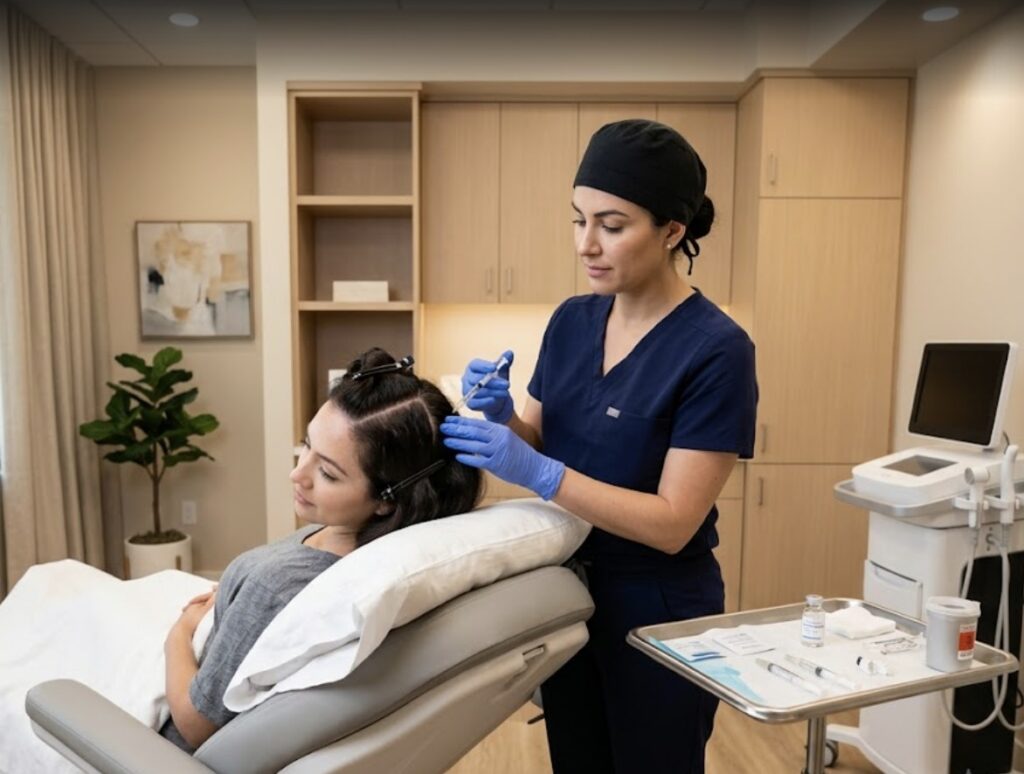
Knowing what happens during a hair restoration appointment can make the decision feel more manageable.
Before Your Appointment
Your consultation may include a review of your:
- Health history
- Current medications and supplements
- Allergies
- Scalp condition
- Previous hair loss treatments
- Pregnancy or breastfeeding status
- Bleeding history
Tell your provider if you take blood-thinning medication or have an active scalp problem. Do not stop a prescription or supplement unless the clinician who manages it advises you to do so.
Your provider may also take baseline photographs. Images taken from the same angles and under similar lighting can help track gradual changes more accurately.
During the Session
The provider examines the scalp and identifies the treatment areas. A topical numbing product may be applied to improve comfort.
Small injections are then placed across the selected areas. You may feel pressure, brief pinching, or tenderness. A typical session at Wellness IV Bar takes about 30 to 45 minutes.
Aftercare and Downtime
Temporary effects may include:
- Mild redness
- Scalp tenderness
- Small raised areas at injection points
- Minor swelling
- Brief sensitivity
Follow the aftercare instructions provided by your clinician. Contact the clinic if you develop worsening redness, persistent pain, drainage, fever, or any other unexpected symptoms.
The appointment itself may be brief, but visible changes in hair density develop on a much slower timeline.
Hair Growth Timeline and Realistic Results

Hair grows in cycles. Each follicle moves through active growth, transition, rest, and shedding phases. Because of this process, no hair restoration treatment produces visible density overnight.
Early changes may appear as reduced shedding, stronger texture, or short new hairs. A fuller appearance may take longer.
Wellness IV Bar commonly recommends an initial Derm Peptide series with treatments spaced about two to four weeks apart. Maintenance appointments may be discussed every few months, depending on the treatment plan and response.
Some patients may begin noticing changes in thickness or coverage after two to three months. Others may need longer.
Results vary based on:
- The cause of hair loss
- Age and general health
- How long has thinning been present
- The condition of existing follicles
- Hormonal or nutritional factors
- Treatment consistency
- Ongoing hereditary hair loss
No responsible provider can promise complete regrowth, a specific number of new hairs, or the same outcome for every patient.
Because treatment timelines and results differ, it helps to compare non-surgical care with transplant surgery before deciding what fits your goals.
Non-Surgical Hair Restoration Versus a Hair Transplant
Non-surgical scalp treatments and hair transplant surgery serve different purposes. One is not automatically better than the other.
| Consideration | Non-Surgical Scalp Treatment | Hair Transplant |
|---|---|---|
| Procedure type | Minimally invasive office treatment | Surgical procedure |
| Main goal | Support the scalp and existing follicles | Move follicles from a donor area |
| Downtime | Usually limited, depending on treatment | Requires surgical recovery |
| Results | Gradual and dependent on follicle activity | Gradual growth from transplanted follicles |
| Treatment schedule | Often involves a series and maintenance | May involve one or more procedures |
| Best suited for | Selected patients with viable follicles | Selected patients with adequate donor hair |
| Main limitation | Cannot guarantee regrowth | Does not stop future hereditary hair loss |
A transplant may make sense for someone with permanent pattern loss and enough healthy donor hair. Non-surgical care may suit someone with earlier thinning who wants less downtime.
Wellness IV Bar focuses on Derm Peptide scalp treatment rather than hair transplant surgery. Patients interested in a transplant should consult a qualified dermatologist or hair restoration surgeon.
Whichever path you consider, daily hair and scalp care can help protect the hair you still have.
How to Support Healthier Hair Between Appointments

Daily habits cannot reverse every type of hair loss, but they can reduce breakage and unnecessary stress on the scalp.
Helpful steps may include:
- Eat enough protein and follow a balanced diet
- Avoid high-dose hair supplements unless a deficiency has been identified
- Limit tight ponytails, braids, extensions, and styles that pull at the roots
- Reduce frequent heat styling and harsh chemical processing
- Brush and style gently
- Address dandruff, itching, or inflammation with medical guidance
- Discuss rapid weight loss, fatigue, or hormone symptoms with a qualified provider
- Protect exposed areas of the scalp from strong sun
These habits may support scalp health and help preserve fragile strands. They cannot reactivate every inactive follicle or reverse advanced scarring hair loss.
Healthy habits are one part of the plan. Choosing a provider who explains your options clearly is just as important.
Choosing Hair Restoration Care in Tampa, FL
A good consultation should leave you informed and comfortable, not pressured.
Before starting treatment, consider asking:
- What type of hair loss might I have?
- Do I need bloodwork or a dermatology referral?
- Why are you recommending this treatment?
- Is the goal to reduce shedding, support growth, or improve coverage?
- How many sessions may be needed?
- What discomfort or downtime should I expect?
- How will progress be measured?
- What happens if I do not respond?
- Will maintenance treatments be needed?
- What is the expected total cost?
Wellness IV Bar & Aesthetics is a nurse practitioner-owned and operated clinic serving Tampa, Trinity, and the nearby Tampa Bay communities. Our approach centers on personal care, clear education, safety, and treatment plans built around the individual rather than a standard package.
That same consultation-first approach also helps answer the questions patients most often have before booking.
Frequently Asked Questions About Hair Restoration Treatment
1. Can hair restoration treatment regrow completely lost hair?
Not always. Results depend on the cause of hair loss and whether viable follicles remain. Non-surgical treatments may support existing follicles, but they cannot reliably restore hair where follicles have been permanently damaged or replaced by scar tissue.
2. How many hair restoration treatment sessions will I need?
The number varies by person. Wellness IV Bar commonly recommends a series of sessions spaced about two to four weeks apart, followed by possible maintenance appointments. Your provider will adjust the plan based on your scalp, response, and goals.
3. Is non-surgical hair restoration painful?
You may feel brief pinching, pressure, or tenderness during scalp injections. A topical numbing product may be used to improve comfort. Sensitivity differs from person to person.
4. How long does it take to see hair growth?
Hair growth takes time because follicles move through different stages. Some patients may notice early changes within a few months, while others need longer. The cause of hair loss, follicle health, treatment type, and consistency all affect the timeline.
5. Is a hair transplant better than non-surgical treatment?
It depends on your diagnosis and goals. A transplant may suit someone with permanent pattern loss and enough donor hair. Non-surgical treatment may suit someone with viable follicles who prefers less downtime. A qualified provider can help you compare the options.
These answers offer a starting point, but an individual consultation is still the best way to determine what may be appropriate for you.
Start With the Cause, Then Build the Right Plan
Hair loss can be connected to genetics, hormones, nutrition, illness, stress, medications, or scalp conditions. In many cases, more than one factor may be involved.
That is why a responsible hair restoration treatment plan starts with a careful assessment. For suitable candidates, Derm Peptide therapy may offer a non-surgical way to support the scalp and existing follicles with limited downtime.
If you are noticing a widening part, a receding hairline, or increased shedding, book a personalized consultation with Wellness IV Bar & Aesthetics in Tampa. We will review your concerns, discuss realistic options, and help you choose a plan that fits your health, comfort, and goals.